
Montessori Approach to Science and Play
Exploring how the Montessori approach supports scientific learning and examines its position on play in early childhood education.
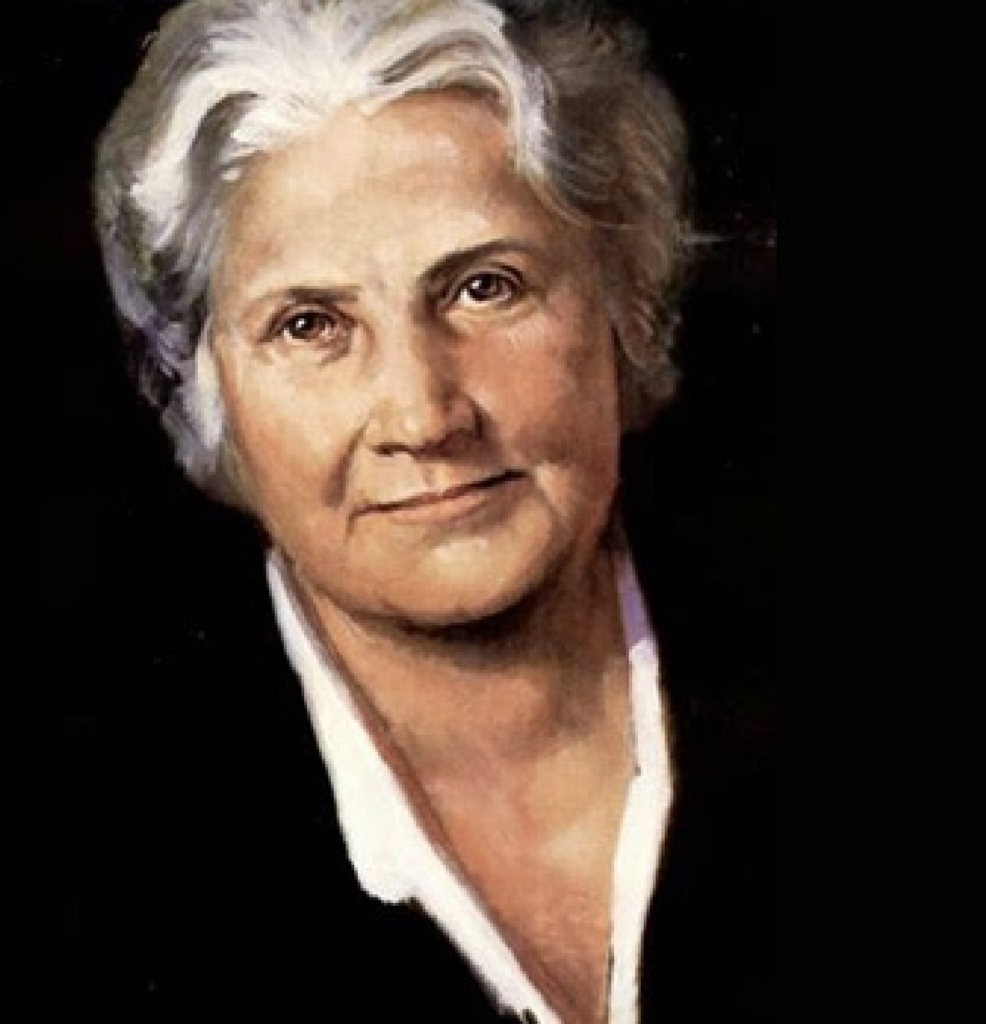
MARIA MONTESSORI
Maria Montessori (1870-1952) was the first female doctor in Italy, specialising in paediatrics and psychiatry (Nolan & Raban, 2024, p. 18). At the start of her career, Montessori worked with children who experienced developmental delays, and later, as part of her work, she visited mental asylums around Rome (Ruhl, 2024, para. 9). What she observed motivated her to create her own educational philosophy.
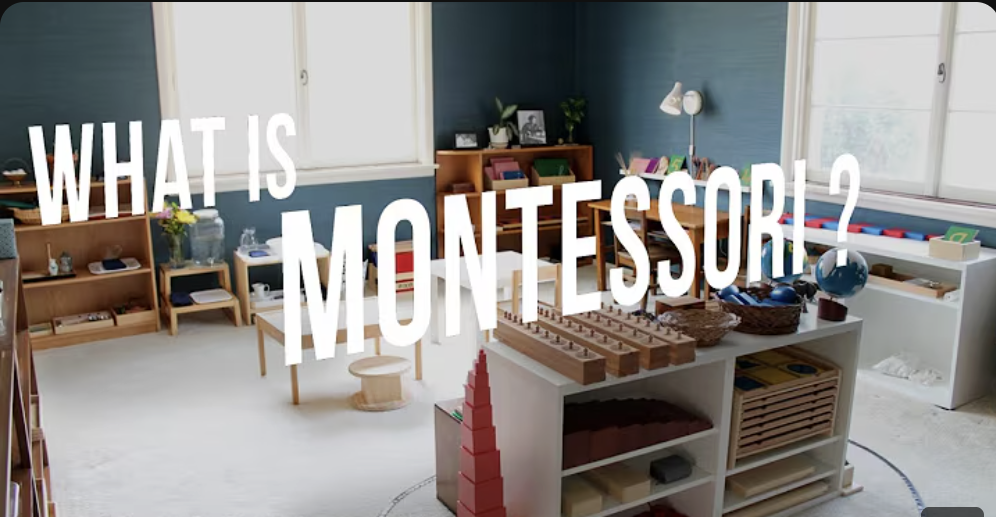
Based on her observations during her work with young children, Montessori came to believe that children possessed intrinsic intelligence. Furthermore, through a ‘prepared learning’ environment, educators can step back and let the children lead their own learning (Nolan & Raban, 2024, p. 18).
TO LEARN MORE ABOUT THE MONTESSORI APPROACH PLEASE CLICK THE BUTTON BELOW
LINKING CURRICULUM AREA TO THE MONTESSORI APPROACH
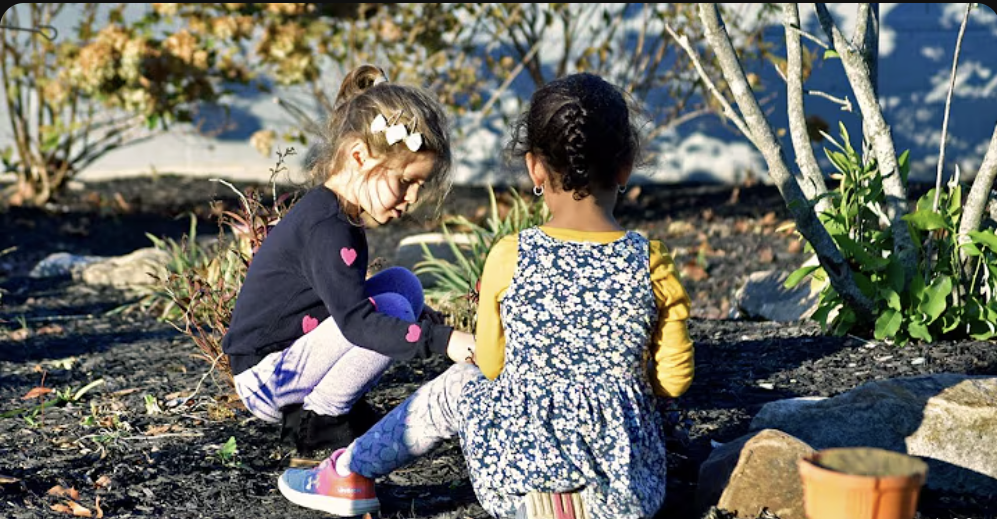
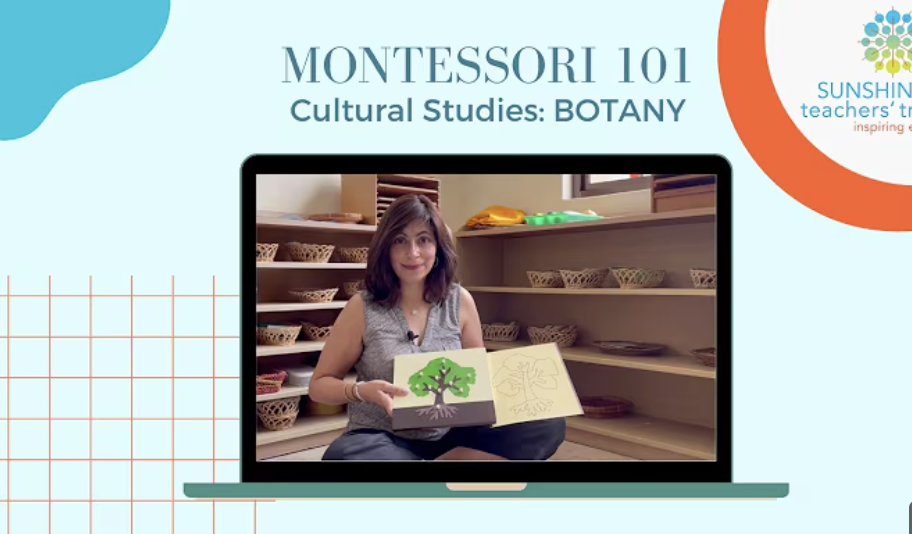
In a preschool Montessori classroom, children learn biological science, such as botany, through sensory experiences and activities (Samur & Yalçin, 2024, p3). The leaf cabinet, for example, contained different leaf shapes and three sets of cards that are used in conjunction with the shapes (Montessori Australia,2023). The child will experience different leaf shapes by tracing around the inset and the frame with a stick, extending their knowledge of the shapes of leaves, as well as preparing the children for later writing. This learning will then be extended by taking the children out to nature to look for leaves and comparing their shapes to the leaf shape from the cabinet.Furthermore, this learning will gradually progress to learning about the names of different plants and their life cycles (Montessori Australia, 2023).
“IN MONTESSORI, CHILDREN WORK. NOT PLAY.”
A CRITIQUE OF THE POSITION OF MONTESSORI APPROACH ON PLAY
The Montessori Approach does not use the term “play” to describe the act of children’s learning; instead, they use the term “work” (Henderson & Edwards, 2016, p.86). This reflects Montessori’s views and position on play. According to Montessori (2012, as cited in Epstein, 2023, para. 10), what differentiates play from work is that the latter has an internal purpose, while the former does not. This belief is heavily influenced by Montessori’s image of the child, which positions children as beings in possession of an instinct or deep internal desire to learn; therefore, by engaging in meaningful activities, they are constructing the knowledge and skills leading to growth (Isaacs, 2018,p. 47; Henderson & Edwards, 2016, p. 85).Nevertheless, many critiqued the Montessori Approach as it contradicts current research regarding early childhood development (Irvin, 2017, p. 3; Kristina et al., 2026, pp. 4-5), which emphasises the importance of play for children’s learning and development. The main argument against the Montessori Approach lies in its focus on intellectual and sensory development and its closed-ended approach to the use of learning materials (Yadav, 2023, p. 33; Shaw, 2015, p. 3). Sutama et al. (2021) claimed that open-ended learning allowed children to develop higher-order thinking skills such as creativity and imagination. The lack of opportunities for children to explore those skills in a Montessori classroom became a source of criticism and a cause for worry amongst parents (Shaw, 2015, p. 3).Nunn (n.d.), however, dispels the supposed limitations of the Montessori Approach by explaining that in a Montessori classroom, creativity is indeed fostered.Not necessarily by giving children arts-and-craft materials, but rather by a long process of cognitive development in which the child absorbed and established reality. Research (Denervaud et al., 2019, pp. 9-10) supported Nunn’s (n.d.) claim by showing that children from a Montessori classroom possess a high capacity for deep concentration and autonomous thinking behaviours, which lead to high creativity skills.Therefore, proving that even with the use of closed-ended learning tools, the Montessori Approach still fosters the development of children’s creativity.
MONTESSORI APPROACH KEY STRATEGIES FOR TEACHING, ASSESSMENT, PLANNING, AND REFLECTION.
TEACHING
- In teaching science concepts, teachers and educators uses different strategies such as demonstration, classification, looking at specimens or artefacts, and excursions. Demonstrating; through experiments, encouraging hands- on experience for the children, children are able to relate the concept or context to real life processes (Sydney Montessori Training Centre [SMTC], n.d). Classification: children learn to differentiate and classify plants and animals, develop a deeper understanding of the different plants and animals creating a sense of care for all living things on the planet (SMTC, n.d).
- Specimens: Montessori are rich with presenting specimens and artefacts to support children’s learning and discovery, explore real plants, animlas, and specimens to further understand how life works, while building their sense of responsibility. Excursions: it helps them to explore their community and nature and making real- life connections that nurtures their understanding of science concepts. (SMTC, n.d)
- Montessori curriculum that focuses on Biology or earth sciences aims to foster in children an ecological view of the web of life and to also develop a sense of responsibility to their environment.
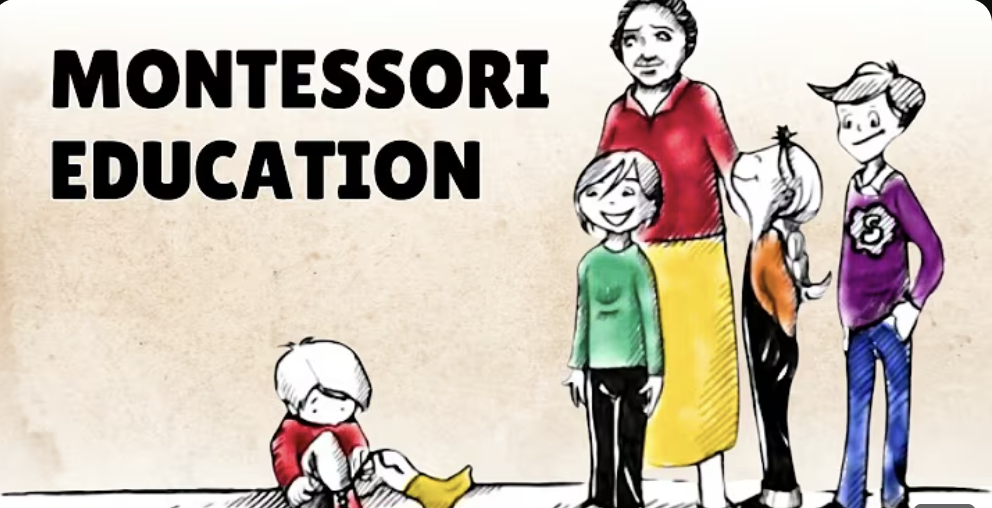
- With Montessori, teachers are there to guide the children to assist them in their learning needs from introducing new lessons, concepts, and materials including the levels of difficulty of each activity (American Montessori Society, n.d).
- As children engages with the learning plans, the teachers provide them encouragement, time and specific tools such life cycles materials, botany leaf cabin, and more that the children would be needing to build on children’s curiosity fostering learning, while providing them choices they need to help them learn, grown and succeed (American Montessori Society, n.d).
- One of the key teaching strategy of the Montessori Curriculum is Demonstration, which is critical because it’s the phase where teachers sit down on the circle and show them the step by step process on how to do the activity or the material, after children engages in the demonstration they are then free to do the activity on their own or with a friend (American Montessori Society, n.d).
- The role of the teacher in the Montessori classroom is to demonstrate to the children the step-by-step process on how to properly use the material, as the demonstration is ongoing children are encouraged to observe and give feedbacks such as questions (Barbieru, & I. T. C, 2016)
- Montessori Educators and teachers is also responsible to be present in the children’s learning avoiding criticisms and focusing more in promoting positive behavior addressing negative behaviors in a constructive manner while also composing self- control (Barbieru, & I. T. C, 2016).
ASSESSMENT
Montessori Curriculum in organized in a developmental sequence which means it begins with simple concepts or learning materials to complex materials (Montessori Australia, 2020).
- Assessments varies based on the child’s mastery of skills and knowledge in a specific concept. Children’s progress in evident in various forms such as spoken and written language, social interaction, creative arts, and application of their learning in their daily life (Montessori Australia, 2020).
Formative assessments done in a Montessori framework is a continuous and observation- based process that allows teachers and educators to develop a specific learning opportunity tailored to their developmental readiness (Montessori Australia, 2020).
Montessori gathers evidence of learning through daily observations which includes implemented activities, follow- up activities, identified learning difficulties encountered by the children and the strategies used to address those (Montessori Australia, 2020).
“IN MONTESSORI CLASSROOMS, CHILDREN MAKE CREATIVE CHOICES IN THEIR LEARNING WHILE THE CLASSROOM AND TEACHER GUIDE AND FACILITATE THE PROCESS” (Ruhl, 2024, para. 30).
REFLECTION
In Montessori, reflection is part of routine and is based on continuous observation. The Montessori approach to reflection is also child-focused and crucial to responsive and effective pedagogy. Educators observe children’s interactions, choices, and engagement in the prepared environment and use these observations as a reflective tool to evaluate children’s learning and development and make adjustments to support each child’s learning. Educators can identify effective and ineffective strategies and use this information to improve their teaching practice. Educators engage in a continuous cycle of observation, assessment, and adaptation to meet the unique needs of each child, demonstrating responsive and intentional teaching (Isaacs, 2018). Montessori educators observe children and allow them to guide learning rather than follow a fixed plan. The educator facilitates learning while responding to children’s needs. Educators can create a learning environment that’s tailored to each child’s unique development (Isaacs, 2018).
This approach to reflection also aligns with the broader early years education and care practice, where observation, documentation, and evaluation are used to review teaching effectiveness and inform future planning. Reflective logs and documentation help educators analyse their practice (Beaver & Wyatt, 2023).
PLANNING
The Montessori way of planning curriculum is characterised by being both organised and flexible. It focuses on children’s needs and interests and helps them become independent. The educators do not predetermine content; they observe the children’s interests, their abilities, and their developmental readiness. Using these information educators develop learning plans tailored to children’s needs (American Montessori Society, n.d). Planning activities incorporate specific materials that ensure children are learning one skill at a time, providing children with the opportunity to work independently and master concepts. This way, the curriculum plans are not fixed, but are an interactive process between the child, the educator, and the environment that changes and grows as the child learns and develops, and it’s based on the idea that children learn best when they’re interested and engaged (Arthur et al., 2025).
MONTESSORI IN PRACTICE.
References:
Arthur, L., Beecher, B., Death, E., Dockett, S., & Farmer, S. (2025). Programming and planning in early childhood settings (9th ed.). Cengage Learning
American Montessori Society. (n.d.). Early childhood: Inside the Montessori classroom. https://amshq.org/about-us/inside-the-montessori-classroom/early-childhood/
Arthur, L., Beecher, B., Death, E., Dockett, S., & Farmer, S. (2025). Programming and planning in early childhood settings (9th ed.). Cengage Learning. https://amshq.org/about-us/inside-the-montessori-classroom/early-childhood/
Beaver, N. H., & Wyatt, S. S. (2023). Early education curriculum: A child’s connection to the world (8th ed.). Cengage Learning. https://studentebookhub.com/wpcontent/uploads/2024/preview/9780357625446.pdf
Denervaud, S., Knebel, J. F., Hagmann, P., & Gentaz, E. (2019). Beyond executive functions, creativity skills benefit academic outcomes: Insights from montessori education. PLoS ONE, 14(11), 1-13. https://journals.plos.org/plosone/article/file?id=10.1371/journal.pone.0225319&type=printable
Epstein, P. (2023). Work needs play. Montessori Life Magazine. https://amshq.org/blog/montessori-education/2023-08-25-work-needs-play/
Henderson, L., & Edwards, S. (2016). Practical approaches and philosophies in early childhood education and care. In J. Ailwood (Ed.), Understanding early childhood education and care in australia: Practices and perspectives (pp. 72-92). Taylor & Francis Group.
Irvin, M. (2017). The importance of play in early childhood education. https://nwcommons.nwciowa.edu/cgi/viewcontent.cgi?article=1067&context=education_masters
Isaacs, B. (2018). Understanding the montessori approach: Early years education in practice (2nd ed.). David Fulton Publishers. https://hmk.am/wp-content/uploads/2021/10/Understanding-the-Montessori-Approach_-Early-Years-Education-in-Practice.pdf
Kristina, P. C., Kasim, N. F., Putri, S. A. R., & Nurliani. (2026). The importance of play in early childhood learning: A holistic approach. General Education and Innovation Studies, 1(1), 1-9. https://journals.khatec.id/index.php/genius/article/download/147/225
Montessori Australia. (2023). The botany cabinet. https://my.montessori.org.au/the-botany-cabinet/
Montessori Australia. (2020). Assessment and Evaluation.
https://montessori.org.au/blog/assessment-and-evaluation
Nunn, P. (n.d.). What is the montessori approach to creativity. Montessori Australia. https://montessori.org.au/what-montessori-approach-creativity
Nolan, A., & Raban, B. (2024). Theories into practice – revised edition: Understanding and rethinking our work with young children and the eylf. Essential Resources Educational Publishers Ltd..
Sydney Montessori Training Centre. (n.d). Geography and Science. https://www.montessoritrainingcentre.com.au/primary-stages-2-and-3-6-12-years/geography-and-science/
Samur, E., & Yalçın, S. A. (2024). The effect of montessori approach-based stem activities on the academic self-respect of preschool students. Journal of Education and Future Year, 1(25), 1-13. https://dergipark.org.tr/en/download/article-file/2814836
Shaw, L. F. (2015). Montessori and play. White Paper Press: The Montessori White Papers, 2, 1-8. https://montessori.org.au/sites/default/files/downloads/downloads/EC18LauraFloresShaw.pdf
Ruhl, C. (2024). Montessori theory of education. Simply Psychology. https://www.simplypsychology.org/montessori-method-of-education.html
Yadav, N. (2023). Critique of montessori’s method of early childhood. International Journal of Multidisciplinary Research in Arts, Science and Technology, 1(5), 29-36. https://www.researchgate.net/publication/378177685_Critique_of_Montessori’s_Method_of_Early_Childhood_through_the_Lens_of_Vedic_Psychology_Perspective